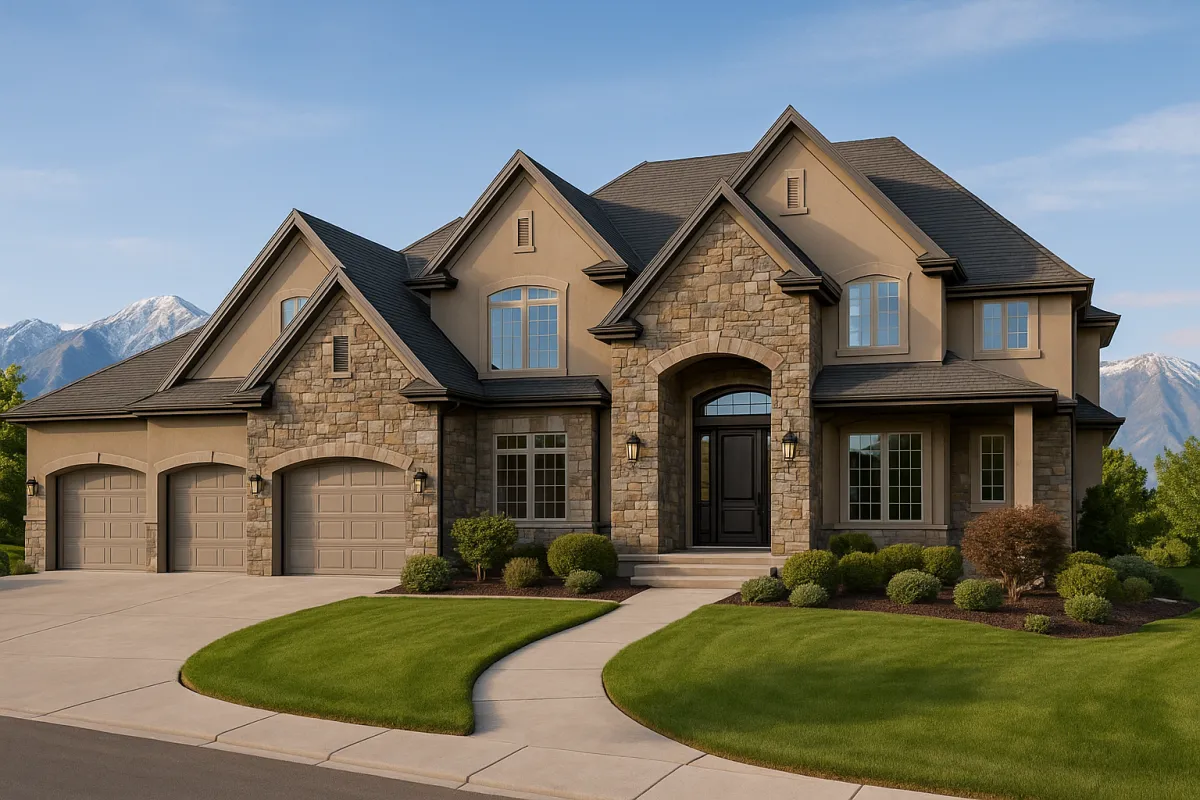
Luxury Home Inspection Checklist for Davis County Buyers
Luxury Home Inspection Checklist for Davis County Utah Buyers
If you're purchasing a luxury home in Davis County, Utah — whether in Farmington, Kaysville, Layton, or Bountiful — a standard home inspection isn't enough. High-end properties in the $750,000–$2 million range come with complex systems, custom finishes, and specialized infrastructure that require a far more detailed evaluation than a typical resale home. This guide gives you a practical, room-by-room luxury home inspection checklist tailored specifically for Davis County buyers, along with expert guidance on how to use inspection findings strategically during negotiations.
Why Is a Standard Home Inspection Insufficient for Luxury Properties?
Most general home inspectors are trained to evaluate standard residential construction. A luxury home — with its geothermal HVAC systems, smart home automation, home theaters, wine cellars, resort-style pools, and custom millwork — requires specialists who understand what those systems cost to repair or replace and what failure modes to look for. A missed defect in a $1.5 million home can easily represent $50,000 or more in deferred maintenance or required repairs.
David Supinger, CLHMS, RSPS, CNE, and Broker/Owner of HomeClick Real Estate, has guided buyers through more than 1,300 transactions over 33-plus years in the Salt Lake metro and Davis County markets. His advice: "The inspection phase is where unsophisticated buyers get hurt the most. Don't send a general inspector alone into a custom-built luxury home. Build a team." As a Wall Street Journal Top 250 agent ranked #189 nationally, David has seen firsthand how missed inspection items derail deals — or saddle buyers with unexpected six-figure repair bills.
What Specialists Should Be on Your Luxury Home Inspection Team?
Before reviewing the checklist itself, assemble the right team. Depending on the property, your inspection crew may include:
- Certified General Home Inspector — Your baseline. Choose one with documented experience in high-end residential properties.
- Structural Engineer — Essential for custom foundations, hillside builds, or any home over 5,000 square feet.
- HVAC Specialist — Luxury homes often have zoned systems, radiant floor heat, or geothermal units that require brand-specific expertise.
- Electrician — Home automation, theater systems, whole-home generators, and EV charging infrastructure need a licensed electrician's eye.
- Roofing Contractor — Slate, clay tile, and metal standing-seam roofs are common in Davis County luxury properties and require specialist assessment.
- Pool and Spa Inspector — If the property has a pool, hot tub, or water feature, hire someone who can evaluate pumps, heaters, plumbing, and decking integrity.
- Pest and Dry Rot Inspector — Utah's climate still produces moisture intrusion issues, particularly in older Bountiful and Kaysville properties.
What Should Be on a Luxury Home Inspection Checklist for Davis County?
Use this section as your working reference. Print it, share it with your inspector team, and use it to track findings by category.
Foundation and Structure
- Inspect all visible foundation walls for cracks, horizontal movement, or efflorescence
- Evaluate soil grading and drainage away from the structure — Davis County hillside lots are particularly prone to soil movement
- Confirm structural integrity of cantilevered decks, balconies, and any hillside retaining walls
- Check crawl spaces and basements for moisture intrusion, vapor barriers, and drainage tile function
Roof and Exterior Envelope
- Full roof inspection including flashings, valleys, ridge caps, and penetrations
- Evaluate gutters, downspouts, and underground drainage systems
- Inspect all exterior cladding — stone, stucco, brick, and wood — for cracking, delamination, or water infiltration
- Check windows and doors for proper sealing, operation, and weatherstripping (custom oversized windows are expensive to replace)
- Inspect garage doors, openers, springs, and automatic safety reverse functions
HVAC, Mechanical, and Energy Systems
- Service records and age verification for all HVAC equipment — zoned systems, air handlers, and controls
- Test radiant floor heating zone by zone; check manifolds and circulation pumps
- Evaluate whole-home humidification and air filtration systems
- Inspect tankless water heaters or commercial-grade water heating systems for age, output, and condition
- Test whole-home generator: fuel supply, transfer switch, load capacity, and service history
- Review EV charging station capacity and circuit protection
Electrical Systems
- Verify main panel and any subpanel amperage — luxury homes routinely need 400-amp service
- Inspect home automation hubs, lighting control systems, and network infrastructure
- Test whole-home audio/video distribution, intercom, and security systems
- Evaluate outdoor lighting, landscape lighting circuits, and low-voltage transformer capacity
Plumbing
- Inspect all visible supply and drain lines; verify pipe material and age
- Test all fixtures, including steam showers, soaking tubs, and multi-head shower systems
- Inspect irrigation systems, including backflow preventers and zone controllers
- Evaluate any water softening, filtration, or purification systems
Interior Finishes and Specialty Spaces
- Inspect hardwood, marble, and tile flooring for settlement cracks, squeaks, or lippage
- Evaluate custom cabinetry for alignment, hardware function, and moisture damage
- Inspect wine cellar refrigeration, insulation, and door seals
- Test home theater systems, acoustic treatments, and dedicated circuits
- Evaluate fitness rooms, saunas, and steam rooms for proper ventilation and moisture management
Pool, Spa, and Outdoor Living
- Full pool and spa inspection: pumps, heaters, filters, plumbing, and finish condition
- Inspect outdoor kitchen appliances, gas connections, and weatherproofing
- Evaluate pergolas, covered patios, and shade structures for structural soundness
- Check fire pits and outdoor fireplaces for gas connections, firebox integrity, and clearances
How Do You Use Inspection Results to Negotiate Effectively?
The inspection report is a negotiating tool when used correctly. According to the National Association of REALTORS®, the majority of home purchase contracts involve some form of post-inspection renegotiation — and in luxury transactions, the dollar amounts involved can be substantial. The key is to prioritize material defects — structural, mechanical, and safety issues — over cosmetic items.
David Supinger, with his CNE credential and three decades of negotiation experience, structures repair requests to focus on items with quantifiable costs from licensed contractors rather than the inspector's estimates. "We don't negotiate off inspector language," he explains. "We get contractor bids, present them as documentation, and ask for a credit or a price reduction based on actual numbers. That approach gets results in the $1 million-plus market."
Buyers can review current Davis County luxury market conditions and comparable pricing using Zillow market data as a starting reference, though working with a locally knowledgeable advisor remains essential for accurate valuation context.
If you're still in the research phase, visit our buying a home resource page for additional guidance specific to the Davis County and greater Salt Lake market.
What Are the Most Commonly Overlooked Items in Davis County Luxury Inspections?
Based on decades of experience in this market, David Supinger identifies these as the most frequently missed or minimized items in luxury home inspections across Farmington, Kaysville, and surrounding communities:
- Hillside drainage and retaining walls — Davis County's terrain creates real exposure here. Settlement and lateral movement are common and expensive to remediate.
- Aging smart home systems — Lutron, Crestron, and similar automation platforms become proprietary maintenance problems when they're more than 8–10 years old.
- Irrigation system condition — A fully landscaped luxury property may have an irrigation system worth $30,000 or more. A failed backflow preventer or cracked main line isn't a minor item.
- Secondary egress compliance — Finished basements and bonus rooms in older luxury homes sometimes predate current code requirements for egress windows.
- Attic insulation and ventilation — Custom rooflines and complex attic geometry create cold spots and ice dam risk in Utah winters that general inspectors often underestimate.
If you're also considering selling a luxury property in Davis County, our selling your home guide covers pre-listing inspection strategies that help sellers get ahead of these issues before they become negotiating liabilities.
How Do You Choose the Right Buyer's Agent for a Luxury Inspection in Davis County?
The right agent doesn't just recommend inspectors — they coordinate the process, review findings with you in context, and position you strategically going into negotiations. David Supinger, CLHMS and RSPS, brings both the credentials and the transactional depth to manage this process at the highest level. His CLHMS designation specifically certifies expertise in the luxury tier, and his 1,300-plus transactions give him a pattern-recognition advantage that's difficult to replicate.
To discuss an upcoming purchase or get a referral to vetted luxury-property inspectors in Davis County, call David directly at 801-698-2526.
Frequently Asked Questions: Luxury Home Inspection Checklist Davis County Utah
How long does a luxury home inspection take in Davis County?
A thorough luxury home inspection on a property between 4,000 and 8,000 square feet typically takes 4–8 hours for the general inspector alone. When specialists are involved — HVAC, pool, electrical — plan on coordinating multiple visits over one to two days. Budget the time accordingly in your contract timeline.
How much does a luxury home inspection cost in Utah?
General inspection fees for luxury properties in Utah typically range from $600 to $1,200 depending on square footage and scope. Specialty inspections add to that total: structural engineers run $400–$800, pool inspections $200–$400, and HVAC specialists $150–$300. Budget $1,500–$2,500 total for a comprehensive inspection team on a Davis County luxury property.
Can I negotiate repairs after a luxury home inspection in Utah?
Yes. Utah's Real Estate Purchase Contract includes an inspection contingency that allows buyers to request repairs, a price reduction, or a seller credit based on inspection findings. In the luxury market, credits are generally preferred over repairs, as buyers often want to select their own contractors rather than rely on the seller's choices.
What is the most important thing to inspect in a Davis County luxury home?
Foundation integrity and drainage are the most critical items in Davis County specifically, given the region's hillside topography and soil conditions. After that, mechanical systems — particularly HVAC and plumbing — carry the highest replacement costs. A failed geothermal system or radiant floor heating network can represent a six-figure repair obligation.
Should sellers get a pre-listing inspection before selling a luxury home in Davis County?
Yes, a pre-listing inspection is strongly advisable for luxury sellers. It eliminates surprises during buyer due diligence, allows sellers to make repairs on their timeline and budget, and significantly strengthens the seller's negotiating position. Buyers in the $750K–$2M range are sophisticated and will conduct thorough inspections — being prepared demonstrates transparency and often supports a stronger final sale price.
About David Supinger
David Supinger is a Certified Luxury Home Marketing Specialist (CLHMS), Resort and Second Home Property Specialist (RSPS), and Certified Negotiation Expert (CNE). Wall Street Journal Top 250 agent. Broker/Owner HomeClick Real Estate, 33+ years, 1,300+ homes sold. 801-698-2526 | vipluxuryteam.com