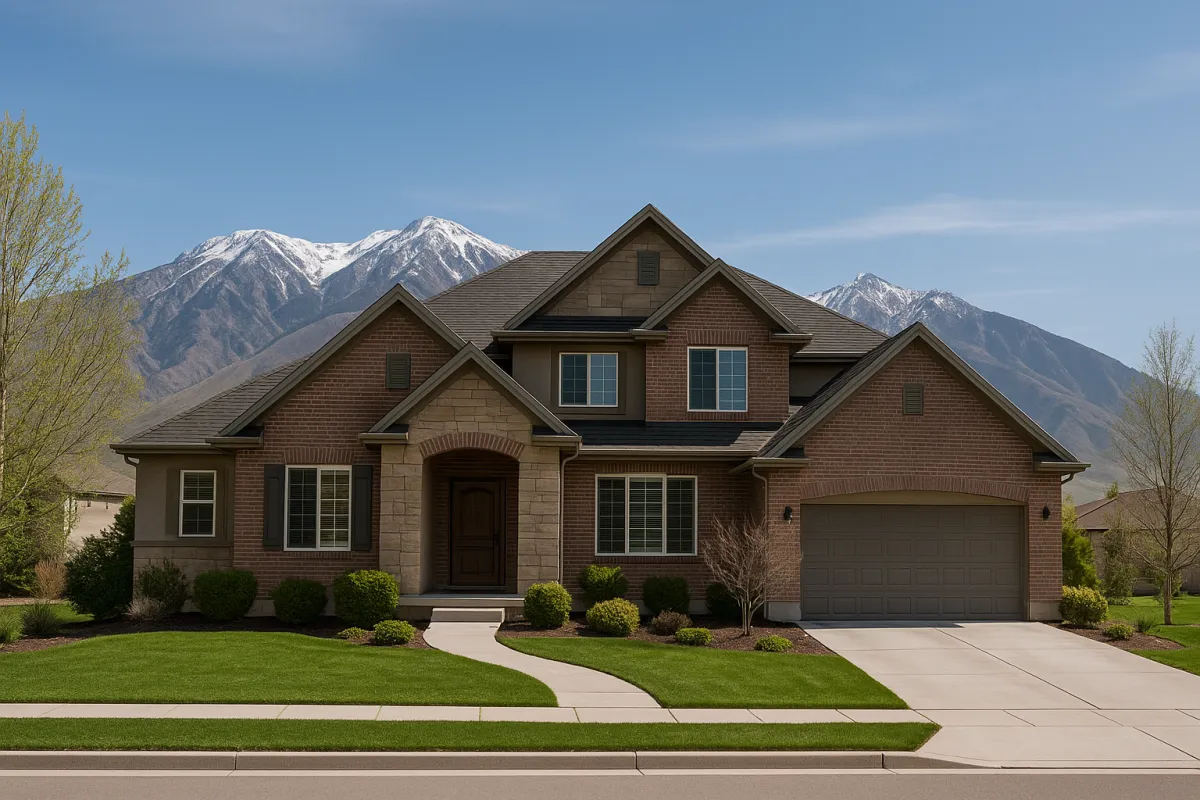
How to Protect Your Home Equity in a Utah Divorce
How to Protect Your Home Equity in a Utah Divorce
If you are going through a divorce in Utah and your home is your largest asset, protecting that equity is one of the most consequential financial decisions you will face. This post explains the practical steps Utah homeowners can take to preserve home equity during a divorce — from understanding how courts value marital property to choosing the right real estate professional to handle the sale. Divorce is never easy, and the real estate decisions that come with it deserve careful, informed handling. What follows is straightforward guidance from someone who has helped hundreds of Utah families navigate this process with as little financial loss as possible.
What Happens to Home Equity in a Utah Divorce?
Utah is an equitable distribution state, which means marital assets — including the equity in your home — are divided in a manner the court deems fair, though not necessarily equal. The Utah State Courts have broad discretion in determining how property is divided, taking into account factors such as the length of the marriage, each spouse's financial circumstances, and contributions made to the marital estate.
In most Utah divorces, the marital home is either sold and the proceeds divided, or one spouse buys out the other's share. A third path — deferred sale agreements — sometimes applies when minor children are involved and the court determines it serves their best interests to remain in the family home temporarily. Each option has meaningful financial implications, and none of them should be approached without both legal counsel and a real estate professional who understands the stakes.
How Is Home Equity Calculated During Divorce?
Equity is the difference between what your home is worth and what you still owe on it. That sounds straightforward, but during a divorce, the valuation itself can become contested. One spouse may believe the home is worth significantly more or less than the other — sometimes because of emotional attachment, sometimes because of genuine disagreement about market conditions.
According to current Zillow market data, home values across Davis County communities like Kaysville, Farmington, and Layton have remained resilient, though appreciation has moderated compared to the peak years of 2021 and 2022. That makes accurate, professional valuation more important than ever. An automated estimate from an online tool is not sufficient for a legal proceeding. You need a Comparative Market Analysis (CMA) from a qualified agent or a formal appraisal from a licensed appraiser — ideally both.
David Supinger, CNE, CLHMS, and Broker/Owner of HomeClick Real Estate, has spent 33 years and more than 1,300 home sales developing the local market expertise needed to produce defensible, accurate valuations in Davis County and the broader Salt Lake metro. In contested divorce situations, that credibility matters.
What Are the Biggest Mistakes That Cost Divorcing Homeowners Equity?
Several common mistakes can significantly erode home equity during a divorce. Understanding them in advance can help you avoid them.
Delaying the sale too long. Emotionally, it is understandable that neither spouse may want to let go of the family home. But carrying costs — mortgage, taxes, insurance, HOA fees, and maintenance — continue to accumulate during a prolonged divorce proceeding. Every month of delay is money that comes directly out of the equity you are trying to protect.
Neglecting the property during the divorce process. Homes that go unmaintained during contentious divorces tend to sell for less. Deferred maintenance, unkempt landscaping, and visible deterioration all reduce buyer confidence and final sale price. Whoever remains in the home has a shared financial interest in keeping it in good condition.
Choosing the wrong agent. Listing a home in a divorce situation requires more than basic real estate competence. It requires sensitivity to co-owner dynamics, the ability to communicate with opposing attorneys, and the negotiation skills to maximize net proceeds under sometimes difficult conditions. The National Association of REALTORS® consistently shows that professionally represented sellers net more on their transactions than those who attempt unrepresented or discount-service sales — and that gap is even more pronounced in emotionally complex situations like divorce.
Failing to account for closing costs and taxes. Utah homeowners sometimes overestimate their net proceeds by forgetting to subtract agent commissions, title fees, prorations, and potential capital gains implications. If the home has appreciated significantly and neither spouse qualifies for the full capital gains exclusion, your attorney and a tax professional need to be involved in the planning conversation before you list.
Should You Sell the Home or Should One Spouse Keep It?
This is one of the most frequently asked questions in Utah divorce real estate, and the honest answer is: it depends on your specific financial picture. There is no universally correct answer.
If one spouse wants to keep the home, they must typically refinance the mortgage into their name alone and buy out the other spouse's equity share. That requires qualifying for a loan on a single income — which is not always possible, particularly in today's lending environment. If the buyout spouse cannot qualify for refinancing, keeping the home may not be a viable option regardless of what either party wants.
Selling is often the cleaner financial outcome. It produces a defined, liquid asset that can be divided clearly, eliminates shared mortgage liability, and allows both parties to make a fresh financial start. If you are considering your options for the sale, the team at vipluxuryteam.com/selling-your-home can walk you through the process specific to Davis County and Salt Lake County market conditions.
What If the Home Is Underwater or There Is Little Equity?
Not every divorcing couple finds themselves with substantial equity to protect. Some Utah homeowners owe more than their home is currently worth, or have so little equity that after closing costs, the net proceeds barely cover the transaction. In these cases, options include a short sale, a deed in lieu of foreclosure, or negotiating with the lender directly.
David Supinger holds credentials through the Certified Short Sale Expert program, which means he has specific training in navigating distressed sale situations. If your divorce involves a home with limited or negative equity, that expertise can make a meaningful difference in the outcome — and potentially spare both spouses from ongoing financial liability.
How Do You Choose the Right Real Estate Agent for a Divorce Sale?
The right agent for a divorce sale is not necessarily the agent who sold you the home or the one with the most yard signs in your neighborhood. You need someone who is experienced, credentialed, discreet, and capable of working professionally with both spouses and their legal teams.
David Supinger is a Wall Street Journal Top 250 agent — ranked #189 nationally — with more than three decades of experience in the Utah market. His CNE designation means he brings professional negotiation training to every transaction, which is particularly valuable when the parties on either side of a divorce may not be communicating constructively. Whether the sale involves a luxury home in Farmington or a mid-range property in Layton or Bountiful, the goal is always the same: protect your equity, close efficiently, and move both parties forward.
If you are ready to talk through your situation confidentially, call 801-698-2526 or visit vipluxuryteam.com/buying-a-home if you are planning your next purchase once the current situation resolves.
Frequently Asked Questions: Protecting Home Equity in a Utah Divorce
Does Utah law require a 50/50 split of home equity in a divorce?
No. Utah follows equitable distribution principles, not a strict 50/50 rule. Courts divide marital property in a manner deemed fair based on the circumstances of the marriage, which may or may not result in an equal split. An attorney familiar with Utah family law should guide your expectations.
Can one spouse force the sale of the marital home in Utah?
Yes, in most cases. If the parties cannot agree on what to do with the home, either spouse can petition the court to order a sale. Utah courts have the authority to compel the sale of marital real estate and dictate how the proceeds are distributed.
How long does it typically take to sell a home during a Utah divorce?
Timeline varies depending on market conditions, the condition of the property, and how quickly both parties can agree on listing terms. In a cooperative situation with an experienced agent, a properly priced Davis County home can be under contract within a few weeks. Contested situations or deferred decisions can stretch the process to six months or longer, increasing carrying costs significantly.
What if both spouses disagree on the listing price?
This is common. A neutral, court-approved real estate professional or licensed appraiser can provide an objective valuation that both parties — and their attorneys — can reference. David Supinger has extensive experience serving in this neutral advisory capacity and can provide documentation suitable for legal proceedings.
Is the equity from a home sale taxable in a Utah divorce?
It may be. The IRS allows a capital gains exclusion of up to $250,000 per individual (or $500,000 for a married couple filing jointly) on the sale of a primary residence, subject to ownership and use requirements. Divorce complicates how these exclusions apply. You should consult a licensed tax professional alongside your attorney before finalizing any sale decisions.
Disclaimer: The information provided in this article is intended for general informational purposes only and is not to be construed as legal advice. Real estate transactions involving divorce can have significant legal implications. Please consult a licensed Utah attorney for legal guidance specific to your situation.
About David Supinger
David Supinger is a Certified Negotiation Expert (CNE) and CLHMS specializing in discreet divorce real estate in Davis County and Salt Lake. Broker/Owner HomeClick Real Estate, 33+ years. 801-698-2526 | vipluxuryteam.com